Jikji Museum Home

Category

Conservation & Advocacy

14 articles

From Metal Type to Mother Tongue: How Jikji's Survival Is Inspiring America's Endangered Language Movement

From Metal Type to Mother Tongue: How Jikji's Survival Is Inspiring America's Endangered Language Movement

The seven-century survival of Jikji, the world's oldest extant metal-printed book, has begun to reshape how American institutions think about preserving languages on the brink of extinction. Drawing on the principles that kept Jikji's knowledge alive through war, colonization, and neglect, museums and universities are now applying those same frameworks to indigenous and minority languages facing irreversible loss. The parallels are striking — and the urgency is real.
Fragile Pages, Lasting Change: How Jikji Rewired the Science of Conservation in American Museums

Fragile Pages, Lasting Change: How Jikji Rewired the Science of Conservation in American Museums

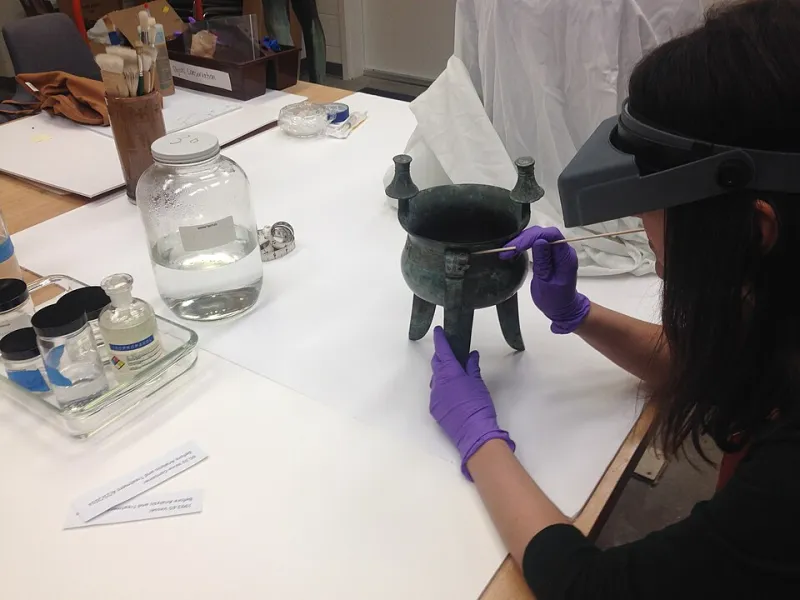
When UNESCO recognized Jikji as the world's oldest extant book printed with movable metal type, American museum conservation labs began asking uncomfortable questions about their own preparedness. The answers prompted a quiet but consequential overhaul of how institutions handle, store, and study fragile East Asian manuscripts. What followed was an institutional transformation that now extends well beyond Korean printed heritage.

Lost in Translation: The Stubborn Digital Mystery of Medieval Korean Metal Type

Lost in Translation: The Stubborn Digital Mystery of Medieval Korean Metal Type

Modern font designers and digital archivists face a formidable challenge when attempting to recreate the precise visual character of 15th-century Korean metal type for contemporary screens and platforms. The problem runs deeper than aesthetics — it touches on questions of material science, cultural knowledge, and whether digital tools are even capable of capturing what a hand-cast letter truly means.

From Cheongju to Your County: How Jikji's UNESCO Recognition Quietly Rewrote American Library Acquisition Policy

When Jikji was inscribed on UNESCO's Memory of the World Register in 2001, few American librarians anticipated how that single designation would ripple through their own acquisition budgets and collection priorities. Over the following two decades, curators at institutions ranging from major research universities to modest county libraries began invoking the Jikji precedent to justify funding for long-neglected Asian print holdings. This article traces that quiet institutional revolution and ask

Who Owns a Revolution? How Jikji Is Forcing a Global Reckoning With Intellectual Heritage and Cultural Sovereignty

Who Owns a Revolution? How Jikji Is Forcing a Global Reckoning With Intellectual Heritage and Cultural Sovereignty

A single Korean manuscript from 1377 is quietly dismantling centuries-old assumptions about who gets credit for civilization-defining innovations. As legal scholars, museum professionals, and policymakers wrestle with questions of cultural ownership, Jikji has emerged as an unlikely but powerful catalyst for reimagining the frameworks that govern intellectual heritage on a global scale.

When Archives Vanish: How Jikji's Near-Disappearance Is Rewriting the Rules of Digital Preservation

When Archives Vanish: How Jikji's Near-Disappearance Is Rewriting the Rules of Digital Preservation

The story of Jikji—a treasure that nearly vanished from human memory before its rediscovery in a Paris library—has become a defining parable for institutions grappling with the fragility of digital archives. From redundant storage networks to decentralized preservation philosophies, Jikji's cautionary legacy is reshaping how libraries and museums across the United States safeguard the records of civilization.

Behind the Glass: How American Museums Are Building the Infrastructure to Save Korean Printed Heritage

Behind the Glass: How American Museums Are Building the Infrastructure to Save Korean Printed Heritage

The global prominence of Jikji—the world's oldest extant book printed with movable metal type—has quietly catalyzed a transformation inside American museum conservation departments. Institutions from the East Coast to the Pacific Northwest are now investing in specialized laboratories, targeted training programs, and cross-Pacific partnerships to address the unique demands of preserving fragile Korean manuscripts and early printed works. What is driving this shift, and what does it mean for the

One Manuscript, a Global Reckoning: How Jikji Reshaped the Politics of Cultural Repatriation

One Manuscript, a Global Reckoning: How Jikji Reshaped the Politics of Cultural Repatriation

When UNESCO formally recognized Jikji as the world's oldest surviving metal-type printed book in 2001, few anticipated the institutional tremors that would follow. From Paris to Philadelphia, the manuscript's contested presence in a French national library quietly accelerated a worldwide conversation about who holds the right to preserve—and possess—humanity's shared heritage. The reverberations of that recognition are still being felt across American museum boardrooms today.

From Cheongju to the World: How Jikji Ignited a New Era of Cultural Restitution

From Cheongju to the World: How Jikji Ignited a New Era of Cultural Restitution

The ongoing campaign to return Jikji to South Korea has become far more than a bilateral dispute between Paris and Seoul. It has evolved into a defining flashpoint for a worldwide movement demanding accountability from institutions that hold culturally significant objects acquired under colonial conditions. This article traces how one 14th-century Korean text reshaped the conversation about who truly owns the past.

A Book in Paris, a Nation's Pride: How Jikji Became the Frontline of the Global Repatriation Debate

A 14th-century Korean text sitting in a French national library has quietly become one of the most contested objects in the global conversation about cultural ownership. The dispute over Jikji illuminates how artifacts carry not just historical weight but political consequence—shaping whose version of history gets recognized, funded, and taught. For American museums and educators, the implications are anything but distant.

When One Book Rewrites History: The Authentication Crisis Reshaping How Museums Evaluate Asian Printed Artifacts

The confirmation of Jikji as the world's oldest surviving movable metal type printed book sent ripple effects through the global museum community, prompting urgent re-examination of Asian print collections long assumed to be catalogued and understood. Institutions from Boston to Los Angeles are now deploying advanced scientific tools to verify the origins and dates of artifacts that may have been misidentified for generations. The financial, scholarly, and cultural stakes have never been higher.

Your Digital Pass to the World's Oldest Books: A Practical Guide to Exploring Rare Print Collections Online

The world's most significant printed artifacts—including Jikji, the oldest surviving book produced with metal movable type—are no longer accessible only to scholars with institutional credentials and international travel budgets. A growing constellation of digital libraries, museum portals, and open-access repositories has made it possible for anyone with an internet connection to examine these treasures in extraordinary detail. This guide walks US readers through the most reliable and rewarding

The Race to Digitize History's Rarest Books—Before Time Runs Out

Across the world's great archives and special collections, conservators are confronting an uncomfortable truth: physical artifacts like Jikji are deteriorating faster than institutions can fund their protection. Digitization offers a partial answer, but the gap between what technology promises and what it can actually preserve is wider—and more consequential—than most people realize.

Paper That Outlasts the Cloud: The Urgent Case for Protecting Rare Printed Artifacts Like Jikji

Paper That Outlasts the Cloud: The Urgent Case for Protecting Rare Printed Artifacts Like Jikji

In an era when entire libraries can be stored on a thumb drive and centuries-old texts can be viewed on a smartphone, it may seem that the physical preservation of rare manuscripts has become less urgent. This view is dangerously mistaken — and the story of Jikji, the world's oldest surviving metal-type printed book, offers one of the most compelling arguments for why tangible heritage still demands our most serious attention.